Replacing My Homemade Accordion Mic Mount
For my previous accordion, I built a microphone mount out of scraps of wood and covered it with gaffer tape. My own little invention. It looked homemade, because it was, but it worked.
The problem I was trying to solve was microphone placement on the left-hand side. Clip-on microphones, like the Audio-Technica ATM models or the DPAs, are convenient, but putting them close to the vents or grille can give you a very boomy sound. Move the microphone over the fingers and you get too much of the clicking. I wanted a bit more distance, while keeping the microphone attached to that side of the accordion as it moved with the bellows.
This was my solution:
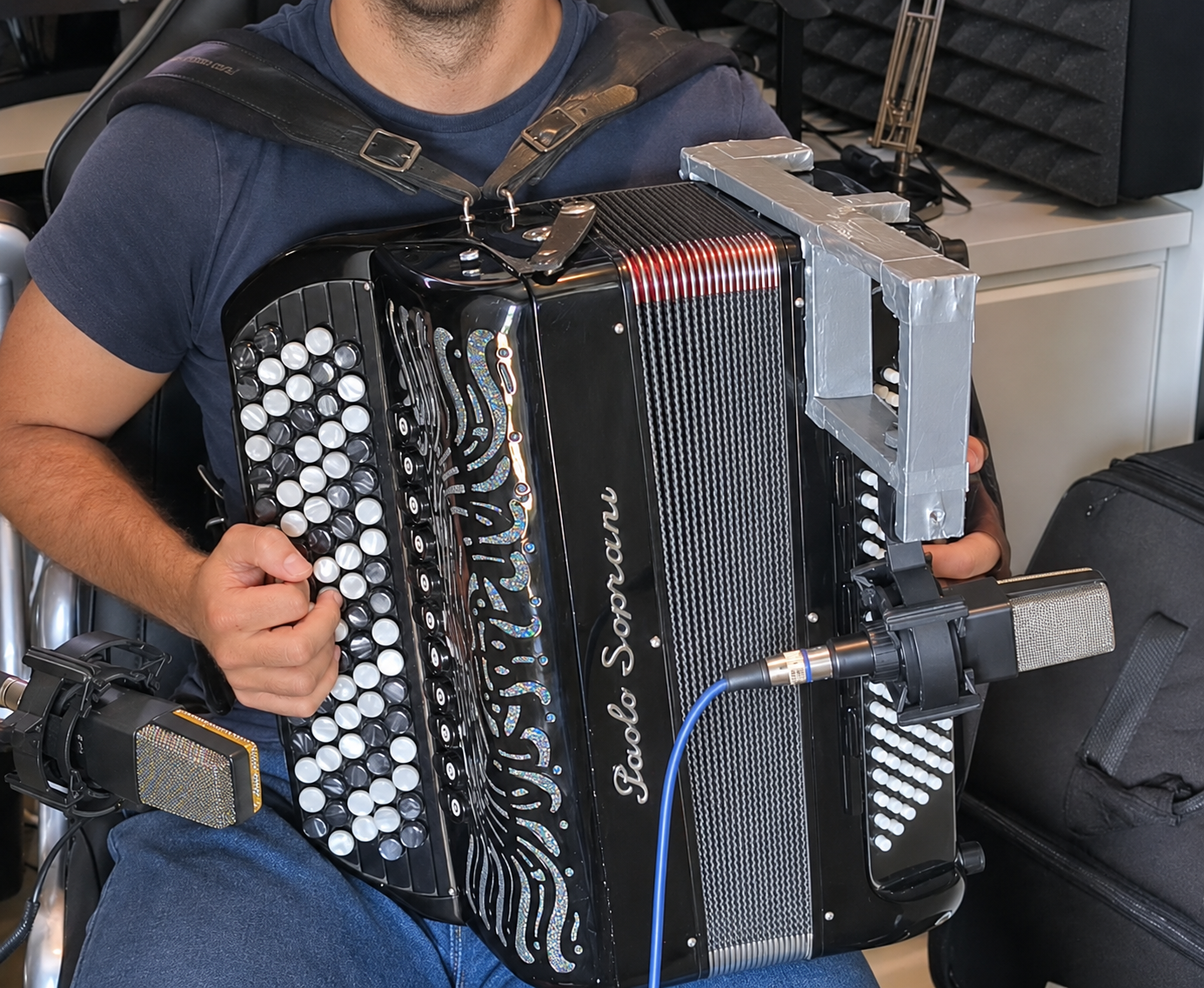
The wooden frame on my previous accordion.
The two microphones in the picture are Baifeli C414s. They worked, although the one attached to the accordion was a bit heavy and affected my playing. The other was on a boom arm. You can also see the old setup in this video.
Then I changed accordions. The new one was larger, and the frame no longer fitted. I could have made another one, but I wanted something more elegant, and a bit less DIY this time.
A clamp meant for a guitar cabinet
What I ended up using is a Gravity MS CAB CL 01 S, coupled with a Gator Frameworks GFW-MIC-SM1525 shock mount. The Gravity is sold as a microphone holder for guitar cabinets, but it fits my accordion too.
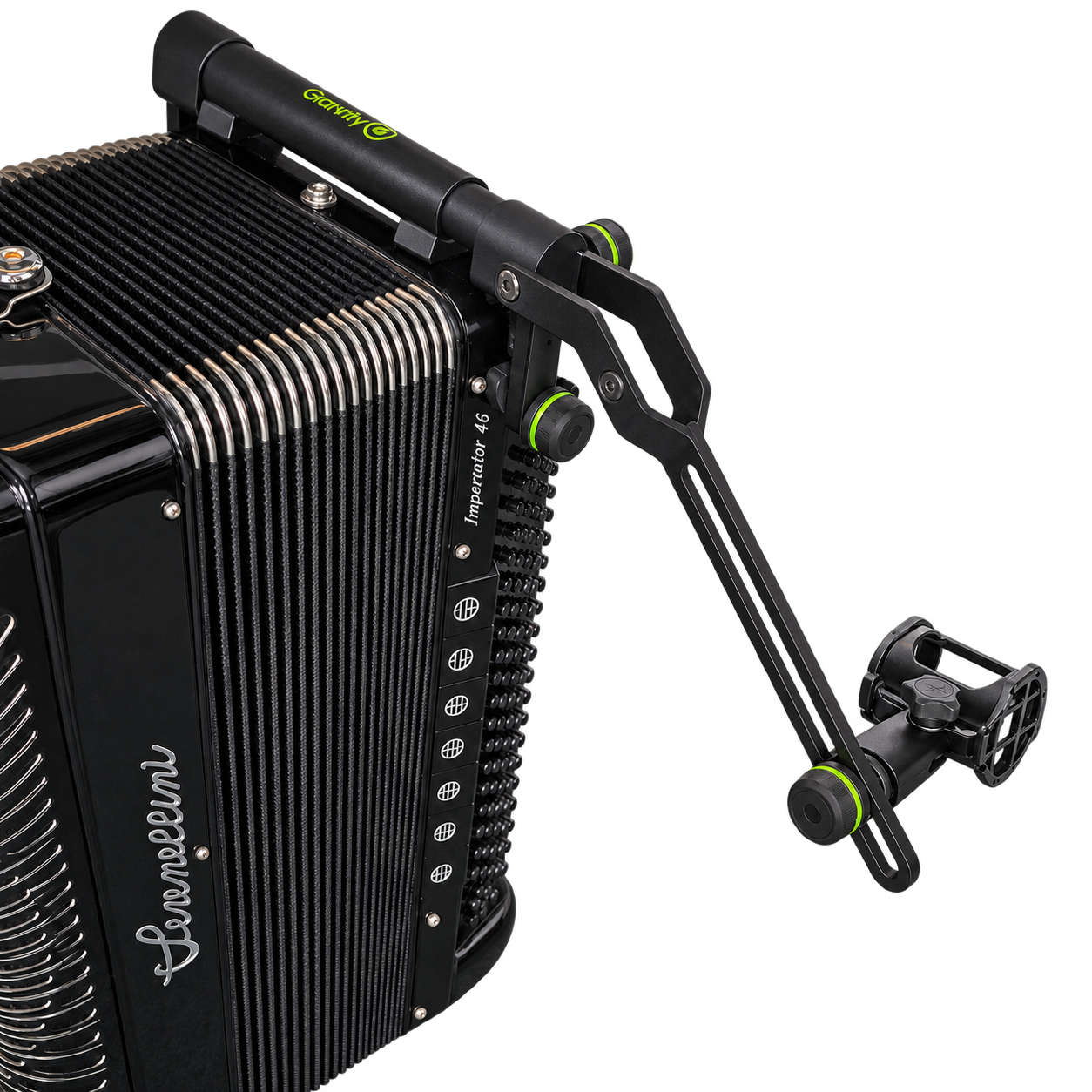
The current setup, without a microphone in the shock mount.
It is stable, and I can adjust the distance and angle of the microphone without having to rebuild anything. That gives me room to find a position away from the grille and my fingers, and keep it there while playing.
The Gator mount takes pencil microphones with a body diameter of 15–25 mm. If you’re thinking of trying this yourself, check the fit of the clamp as well: Gravity lists a clamping range of 200–300 mm. Thinner accordions, like my previous one, would need padding if they measure less than 200 mm where the clamp attaches.
Keeping the microphones I already own
One thing I like about this setup is being able to use microphones I already have. If you own a stereo pair of small-diaphragm condensers, for example, you can use one for each side of the accordion.
My Line Audio CM4s are what I use when I want a neutral sound. I like how naturally they capture the instrument.
The Zoom ZPC-1s have a more modern sound to my ears: sharper, a bit more piercing. That can be useful when I need the accordion to cut through a mix.
I also own Takstar CM-63s, which sit somewhere between the Zooms and the Line Audio for me. They are extremely good for their price, around €30 per microphone. You can absolutely get a professional sound with these.
I like having those choices. The mount can stay, and I can change the microphone depending on the sound I want. After the wooden frame and the heavier microphone on my previous accordion, this is a much more practical arrangement for me.